Saturday, February 23, 2013

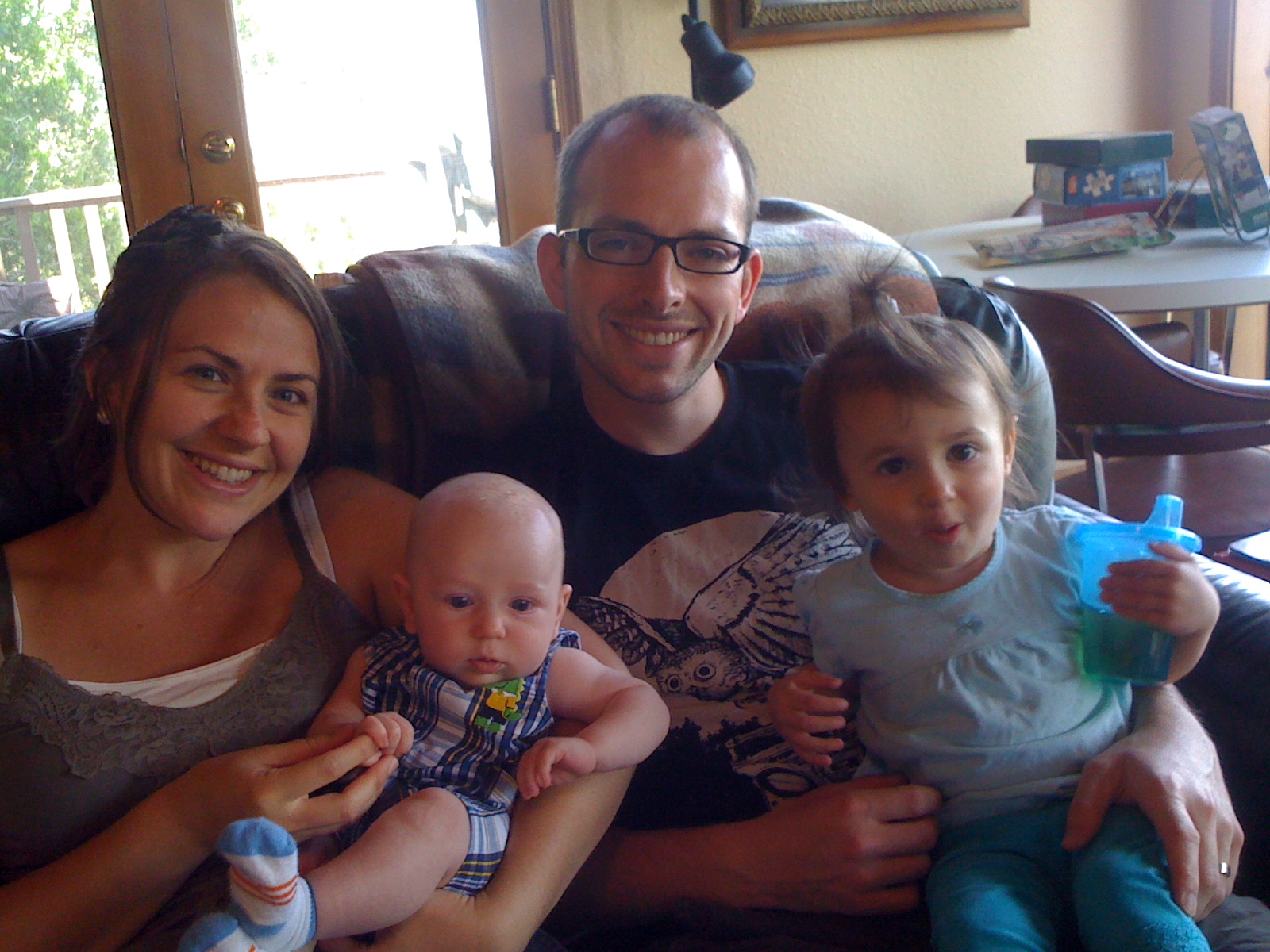
Because everyone wants to know how you found out that you were pregnant, right?

Thanks to typical New DeLew-style of over-sharing intentional openness, many have been aware of our contraceptive choices, mainly the fertility awareness method (aka the natural method). No gory details here, but essentially it means that I know my body like the back of my hand and that I'm quite aware of when I am and am not fertile. This system has worked quite well for us over the past three years.

The idea of having a baby has not been super far from our minds, thanks to my semi-pressuring siblings who have busted out seven nieces and nephews in the past five years. We were in the beginning stages of starting to pray about thinking about the possibility of considering the option of one day wanting to start a family. So, yeah. That was where we were at, but we were praying that God would loosen my tight grip on wanting to manage every aspect of my life. Because I have this strange tendency of feeling like I need to control everything.

The first part of February consisted of super long workdays, very little rest, and a number of high-pressure situations. I've got a pretty high threshold for busyness and stress, and yet for some reason, I was getting hit pretty hard by all of this. I couldn't bounce back. So I decided to take a four-day weekend in order to force some relaxation. Mark and I lazily woke up on Saturday and something was still "off" about me. I casually mentioned to Mark that "I'm not at all concerned, but I'm curious enough to take a pregnancy test." I wasn't concerned because I know my body.

I happened to have one pregnancy test at home (because every married couple has to have a scare at least once). And so I took the test. Then Mark heard from the other room, "Uh oh. That's not good." Positive.

The next few hours included hyperventilating, researching the probability of false positives, going for a three-mile run, lots of confused giggles and smiles, buying two more tests from Target, taking said tests resulting in two more positives, and a good amount of praying. This is real.

So here we are, on this little journey. It's exciting, shocking, mind-blowing, and sobering. This wasn't a mistake, it was absolutely where God is leading us now. Things aren't always exactly as we planned, and actually, that's the confusing beauty of it. We're on a new adventure, with plenty of twists, turns, valleys and peaks, I'm sure. But through it all, I hope to be as the righteous mentioned in Psalm 112:7, "She will have no fear of bad news; her heart is steadfast, trusting in the Lord." So, here we go!    

Sunday, January 13, 2013

12 Things about 2012

Since the New DeLews were fairly silent on the blog over the past year, we might as well share 12 things about 2012-- just to give an overview of the year.  

1. Roommates- why have a second bedroom if it's empty? In the spring we had an incredible 6'9'' roommate who painted our walls (thanks, Tyler!), and this past fall, my dear friend (hi Melissa!) who frequently washes our dishes has been staying with us. Although the Medill is small, it's mighty. And we just love having it open for all to use.


2. Three-Year Anniversary- Yeah, we really love being married. It's pretty cool. 

3. Working. A Lot- With a ton of projects and firm deadlines on the horizon in 2012, we dedicated ourselves fully to work. Lots of late nights and weekends, but we felt like it was the right time for us to dive into our careers. We're seeking to have a more balanced approach now because that wasn't sustainable. But it was a learning experience.


4. Nicaragua- In the midst of all that work, somehow we found a way to pop over to Central America. Drinks on the beach, staying with a lovely Nicaraguan family, and eating tons of rice and beans, it was a perfect break. 


5. New Nephews and Nieces- We got to welcome two lovely babies into the George family. Woodrow Morton George and Eden Elizabeth Majorins. I had the honor of staying with Eden in the hospital the evening after she was born. One of the best nights of my life.

6. Becoming Bosses- I'd like to think this is somehow connect to point number two, but both of us entered into the world of management this year. Supervising employees has its challenges, but we're grateful for the opportunity to grow in this way.


7. Indstanbulia- We took a two-week trip to Northern India, which took us to the Himalayas, the Taj Mahal, the desert, and the capital. So many beautiful colors, intense smells, and delicious food. Enroute to India, we had a chance to stop by Istanbul for 30 hours. We found some baklava, whirling dervishes, and hookah while there.

8. Acquiring another AC unit- It was a hot summer. Really hot. Someone had pity on us and gave us a third AC unit. It brought a lot of joy and allowed Mark to keep his shirt on while working from home.

9. Week of Thai Food- In an effort to learn how to make authentic Thai food, we visited a Thai grocery store and bought enough ingredients to make unique dishes for an entire week. It was amazing. We discovered kao soi, which changed our lives.

10. Church Leadership- After attending our urban-focused, diverse church for the past four years, we've been given new opportunities to serve in leadership roles. We're really grateful. 


11. Thailand- Our dear friends (Hi Chuck and Vina!) decided to get married in Thailand, so we figured we should go out and support them. Thanks to our airline miles, we were able to get the flights for free. It was a lovely week of friends, love, and lots of amazing Thai food.

12. Friendships- We're deeply grateful for the friends that made this a full and beautiful year. We're challenged and encouraged by the community around us.

Monday, December 12, 2011

An awakening to Chinua Achebe

I recently finished a compilation of 3 of Chinua Achebe’s novels: Things Fall Apart, No Longer at Ease, and Anthills of the Savannah. It was completely foreign to anything I had ever read before, as Achebe’s utilization of oral tradition, proverbs, Igbo language and non-linear storytelling overwhelmed my senses. Achebe’s distinctly (and refreshingly) non-Western writing style inserted me into a West African culture. It was reading by feeling: the truth of the proverbs, the weight of heritage, the glue of family and community, and the pain of the tragic events caused by the clash of modernity and tradition.

It is this first collision between European colonists and the Igbo tribe in Nigeria that Achebe explores in Things Fall Apart. The reader is introduced to Okwonkwo, a prominent man in the foremost Igbo village at the prime of his life. We see his pride, arrogance, compassion, and honor. Through his eyes we view the unwelcome intrusions of British justice and religion, and their devastating impact on his family, on his standing in the village, his village’s prominence within his tribe, and the Igbo culture as a whole.

I’ll admit that Achebe’s portrayal of the Christian missionaries felt as true as it was frustrating. Frustrating because I identify myself as a Christian, yet sympathized more with the traditionalist characters than the Christian ones. Because in all the I have spent in sub-Saharan African countries I had never once asked a national about their perception of colonization. Because I had never read about the colonization of Africa from an African’s perspective. Moreover, my meager exposure to African thought is still many times greater than that of most other Americans. It is a tragedy that the stereotypes of an impoverished, starving, diseased, corrupt, and violent Africa prevail throughout the Western mindset. More readings of Achebe and other African authors would be the beginning of a new awakening of the West to the diverse cultures and the rich histories that comprise Africa.

The second book in the volume, No Longer At Ease, translates these themes into a Nigeria that is on the brink of independence, yet is under a new kind of imperialism. This story follows the grandson of the main character from Things Fall Apart, and it illuminates the dark path into corruption that continues to ravage the political lives of so many African politicians. This grandson was supposed to usher in the bright future of an independent Nigeria, yet succumbed to the very temptations he vowed to fight. For the first time, I understood some of the pressures that are unique to the West African public official and how the imposition of a Western-style government fails to address the reality of communal bonds and familial obligations. I see in a new light see the impact of the clash of Western modernity and Igbo traditionalism, and I recognize that the vague label of “corruption” is insufficient in describing the challenges that face the Nigerian (and perhaps other African) societies in the 21st century.

Anthills of the Savannah, the final installment of this volume, takes the themes present in the first two novels and develops them into their late-20th century manifestations. The reader is thrust into a chaotic West African dictatorship struggling to maintain a pretense of democracy in the face of an increasingly restless population. Achebe gives a more intimate exploration of the characters’ thought lives, and the novel swells with poetic daydreams and inspiring speeches. The point-of-view transitions from character to character, which makes the first few chapters a bit disorienting when read immediately after the simple third-person narrative of the first two books. But after I was accustomed to this different style and the new characters, Anthills of the Savannah became my favorite of the three works. This book provides a more comprehensive view of a West African nation; the reader meets the president, members of his administration, academics, cab drivers, market-ware hawkers, and slum-occupants. As the regime unravels, Achebe slowly adjusts the focus of the story from the primary individuals onto the community that they become. The rediscovery of traditionalism and community within the urban modern context is the salvation of the people that find their lives upended by the political chaos. The main characters must draw back from their individualism into community which is protective and close-knit, yet open and hospitable story. Once these developments occur, the hope, dynamism, and beauty of these characters, and thus of the modern West African experience, finally shine through the tragedy that was wrought by colonialism and continued by the corrupt and abusive. This sunrise of hope—even amidst the suffering—is made even more precious by the despair witnessed in Achebe’s first two works.

http://en.wikipedia.org/wiki/Chinua_Achebe

http://www.amazon.com/Things-Fall-Apart-Chinua-Achebe/dp/0385474547/ref=sr_1_1?ie=UTF8&qid=1323734896&sr=8-1

Thursday, July 21, 2011

July and All Its Craziness

July has been one of those months where you go to sleep on the 1st and you wake up on the 31st. Time has flown and it doesn’t seem like it’s going to slow down. To recap, in this month alone, we have:

-celebrated my grandma’s 90th birthday with my extended family in California
-met my youngest nephew for the first time
-enjoyed the infamous 48-hour George Family Vacation
-had a friend live with us for a month
-spent almost a week at the DeLew Family Reunion in Wisconsin
-played on a weekly beach volleyball team
-endured the Heat Wave from Hell (well, I hope we’ll endure)
-half-heartedly started half-marathon training
-whole-heartedly started making tons o’ breakfast smoothies

And there are still 10 days left in July! And in those 10 days alone, we will:

-host my lovely brother-in-law while he visits for a week
-go on a five-day business trip (me)
-help friends renovate their apartment (let’s be honest, Mark will)
-have a bachelor party at our place (Mark again, I guess)
-attend a wedding
-try to survive the rest of the Heat Wave from Hell

In no way do I assume that we are alone in this busyness. It’s summer, this is what happens. But I think it’s important when all you can do is go-go-go, to take a breath and remember what you have done and what you are doing. It’s too tempting for us to go from event to event, responsibility to responsibility and actually miss the significance of each moment. So here I am, listing out each major thing so that I might sit with and appreciate each one. It’s been a blast of a summer. With so much to do, we have so much to be thankful for.

Thursday, June 30, 2011

Holding Loosely

During pre-marital counseling (about 2 ½ years ago, crazy!), we began the never-ending discussion of what finances would look like in the lives of the New DeLews. We talked about our view of money and how we are to use it. Everything was pretty theoretical at that point, as we were a one-income family, so our financial decisions were somewhat limited (do you want pasta or rice for dinner tonight, honey?) But even in our limitedness, we still had the power of choice in little things. And as Mark and I would review the palette of choices in front of us, we discovered that we share the elusive value called generosity.

Generosity is a really broad term with about a billion perspectives of what ‘being generous’ looks like. A hypothetical example: Mark offers me a bite of his Kobe beef burger. This is an incredibly generous act for him. But if I don’t realize the abnormally high value he places in this dead animal-turned food, then I won’t understand his act of generosity. In fact, I may feel like he is stingy by only giving me one bite. Marital issues emerge, cultural miscommunications explode, and suddenly an act of generosity morphs into an argument about who is more selfish, ungrateful, or you name it. Sweet. Sounds like fun.

So over the past two years, we have been exploring two primary questions—what is generosity? And how should generosity take shape in our lives? I’ll focus on the first question in this post. First, I think that we should broaden the ways in which we express generosity—through our time, skills, sharing resources, etc. Our goal is not to simply give money away so that we feel good about ourselves. But I believe that inviting people into our lives, giving to others, and being open to receiving generosity are all components of it. Everyone, regardless of socioeconomic status or situation, is called to be generous. That’s one of the things that connect us to each other—we all have something to give, and we all are in some kind of need.

Through all of our conversations, I’ve come to understand being generous as the state and act of holding loosely your possessions, time, control, and status, so that you may share with others. Being generous is more than writing a big check to a community center or buying dinner for your friends. The generous action must be accompanied by an openness to let people into your life and to relinquish your sense of control. And actually, when I frame it this way, I start to realize that naturally I’m not so generous after all! It’s something I have to intentionally work on and practice. If I start to feel like I’m tightening my grip on something, it’s a sign that I need to open my hands and share it with others.

This is an important habit because as humans in a community, we are designed to share with each other. I think living generously is moving closer toward who we were meant to be. We were meant to give ourselves to each other in response to the generosity we’ve experienced—from God, friends, or whomever. It’s tough to hold loosely the things I value. And yet, when I realize that I have been the recipient of generous love and grace, I am encouraged and empowered to share that with my community.

Monday, June 27, 2011

How I'd survive the Apocalypse

The other day, we had an unnerving realization. Now usually, the Other DeLew and I talk about a lot of important things, (like world events, wine, living in community, insert cool/socially conscientious buzz word here.) But this revelation came from a mundane conversation about our car. Recently we’ve noticed a clanking sound from beneath our car. Like something is loose. The last time I was at the auto shop, the mechanic removed a rusty bar from the bottom of our car and told me that it’s just an unnecessary scrap of metal that holds the muffler in place. But I’m sure that ‘lack of rusty bar’ isn’t causing the clanking… Right?

I asked Mark if he had any ideas about what might be clanking. Mark replied, “of course I have no idea what it might be.” We both laughed at how little we know about cars, home improvement (one of the main reasons we’re not itching to buy a home), gardening, or really anything that involves hard labor. At this point, Mark said, “You know, if the apocalypse happened, we’d be the first to get kicked out of the surviving community. We don’t have any hard skills!”

(At this point the conversation turned into a debate about zombies. I, personally, don’t like them and think they’re stupid. As a result, Mark was defending the zombies. Maturity reigns over here.

Back to the matter at hand: in high school I went on mission trips to Mexico where my team built houses for Mexican families. Mind you, I wasn’t the most adept at using a hammer or nail gun, and neither were most of my teammates. Few of had ever seen a, well, I don’t even know any tool names to use as an example. A henchsaw? Let’s go with that. We were really eager to serve, but I’m not sure if serving with a hammer was the best use of our skills. In fact, I’m pretty sure there were a couple of locals who knew a thing or two about construction who may be willing to work … I better explore this topic in another post.

All this to say, I started thinking about what value I could bring to a post-apocalyptic world in which we were fighting off zombies. I could manage a project, facilitate clear communication processes, write a pretty convincing letter to the Zombie King requesting that he be generous with us and let us live. All of this sounds pretty lame when you’re fighting for survival with swords and bayonets (this is my picture of post-apocalyptic living). But I actually think those things would be important! I think it would help the community survive and perhaps thrive!

Sometimes it’s hard to see how our specific gifts can be of use. But I’m convinced that we have all been given gifts for the good of the community. We all have our unique skills and passions, and it’s through identifying and nurturing them that we might be able to make our community stronger. And together, we may in fact survive the Apocalypse.

Thursday, June 23, 2011

Highs and Lows

It's been a couple months since I've posted, but instead of lamenting about how busy I've been, I'm going to share the highs and lows of the past few months. That's probably a bit more interesting.

Highs

Viva Costa Rica. For the fun of it, and because the New DeLews hadn't been out of the country since 2008, we decided to take a trip to Central America. Incredible coffee, deserted beaches, bike rides to local bars, practicando mi espanol, sunburn, losing a wallet in a taxi. We learned something that we've always thought- we're awesome travel partners.


(F)Easter. To celebrate
resurrection, we hosted a Feast the day before Easter. Seventeen people came together for stuffed lamb, chicken, stuffed mushrooms, sourdough stuffing, and wine was a'flowing. It was a sweet time of celebration and community.

Two Years. The New DeLews may not be so 'new' anymore. In May we celebrated our two-year anniversary. We took a staycation downtown and reflected on how thankful we are to be with each other. I feel like we've grown a lot as a couple and as individuals in the past year especially.
Summer weather. There is nothing like Chicago in the summer. A couple weeks ago, like a lightswitch, it became summer. Grilling out, late-night bike rides, free concerts
downtown, beach volleyball. This is the reason we are able to survive the 8-month winter tundra.


Lows

Missing out. Living in Chicago has its incredible perks, but one of the hardest things about living here is that I miss out on George Family events. My nephew, Manny, was born in the spring and I have yet to meet him! Pictures and skype aren't able to capture what it's like to be at 3 year old birthday parties, orchestra concerts, or summerfest. That's definitely a low.

"Spring" weather. Yet again, Chicago has been confused about what spring is. Torrential rain, spring snow, 40 degree weather. Just, bah! come on, Chicago. Pull it together.

Friends leaving. This is a transitional time for a lot of our friends. A couple of our close friends are moving away and so we've had to say goodbye. It's a little bizarre for us to be some of the stable ones in our community. I'm thankful that we are more settled in our careers and community here in Chicago, but it means that we see people leave for exciting new things, while we remain here.

Lack of running. Have I mentioned the weather yet? My goodness, after I ran the marathon, I promised that I would never get out of shape again. I was all geared up and ready to start running outside in March, but it was cold, snowy, and windy, my body just couldn't handle it. So now it's the end of June and I'm re-learning to run in 85 degree weather. Oh Chicago.

Through the highs and lows of every season, I think it's really important to take a deep breath and reflect on where we have been and where we are going. Before we get caught up in summer vacations with family and really busy times at work, I want to be a woman who remembers the little things that shape our lives-- whether that's awful weather, good friendships, or bike rides. So I'm thankful for the highs and the lows. And looking forward to oh so many more.